Sunday, April 12, 2020

I am remembering~ways to live with isolation and uncertainty


dear friends experiencing loneliness, anxiety, or fear,

i am there too, some days.

i am practicing two ways to ease my loneliness, separation from loved ones, grief for humanity and uncertainty of this moment as we reside with COVID-19.

may these practices help you or a loved one~

practice one:
i have been thinking of my grandparents and what they lived through, as immigrants, legal and illegal, coming to a new country, working the land, in Hawaii to pick pineapples under difficult labor conditions and later as farmers, gardeners, merchants.  they lived through incarceration, family separation, a world war and nurtured a family over generations.

 in this moment i am called to remember my ancestors, their struggles and triumphs, imperfections and wounds, joys and delights. they survived many conditions that shook them up, reminding me of how we are shaken today.

with more time for reflection, a benefit of sheltering in place, i am remembering that growing up, we had a family altar and offered steamed rice, a red or pink camellia, or a tree ripened tangerine or persimmon from the garden to our ancestors.

we offered gratitude daily as we put our hands together,
in gassho
and bowed. a practice we continue.


i'm calling in all my ancestors~

 blood ancestors, grandparents, great grandparents and beyond who lived their lives as immigrants, survivors of war, discrimination, racism and those in Japan survivors of atomic bombs.

spiritual ancestral teachers, some known, some unknown who continue to help to guide and inspire me;  Dogen, Basho, Shantideva, Shinran, Gandhi, Maya Angelou, Grace Lee Boggs, Audre Lorde, Nelson Mandela.

land ancestors, finding solace in the trees and clear memories of bathing in forests of cedar and fir, held in their presence feeling safe, serene, and at home.  each morning we walk amongst dozens of shades of green, leaves and foliage in countless shapes, a visual symphony greets us.  recalling the mountains  and mountain ranges we have been lucky to have walked,  appreciating their grace, strength and solidity.  remembering the Earth is continually healing and repairing herself.


 we are trees, mountains, rivers, minerals, air, fire, soil.

 welcoming the ancestors daily, offering a bow to feeling supported by blood, land, spirit.
our family ancestor altar-Buddhist, Jewish, of Japan, Russia, Hungary and beyond


 our altar as antidote to isolation and anxiety.

practice two:
while sheltering in place,  handwrite one love note a day or reach out to one friend who might need to hear a caring voice. write from the heart. instead of rushing, compose each sentence as if each is a gift from your precious heart to another's precious heart.

pause,  address the envelope as a meditation,  make it an offering, a meditation of your precious breath, of lovingkindness, of compassion imbuing the envelope and its contents with deep attention, intention, and affection.

offer your precious presence by deeply listening to a friend on the phone, share a poem or song through voice memo.  listen for a time without interruption or the desire to offer advice.  offer a few minutes of sitting quietly together listening to three breaths, deeply, fully, wholly. take a chance to show a part of you that's real and vulnerable.


in living with uncertainty of our pandemic, i'm practicing not knowing when i might be with my loved ones again and some days my heart splits open. and when i acknowledge feeling shattered, it is easier to express how they have enriched my life. can i be a good friend in this moment of physical distancing?  how can i be more fully present? what is most important to convey to ones I care for so deeply?

the ancestors are calling me into this moment~


wake up dear one. we have been waiting for you.
look at this pandemic as your appointment to remember what is most important.


Saturday, February 15, 2020

Can I Take A Picture of You And Send It To The White House?

It  was MLK weekend, does that come into play here? yes and no and maybe.


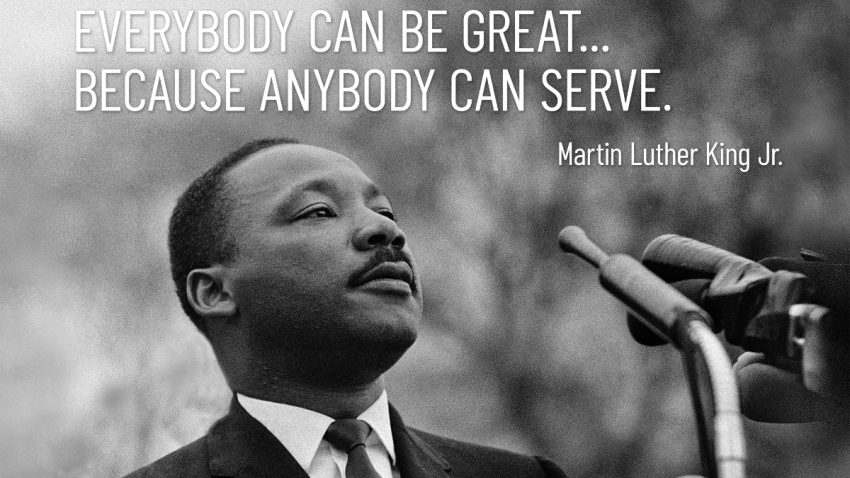
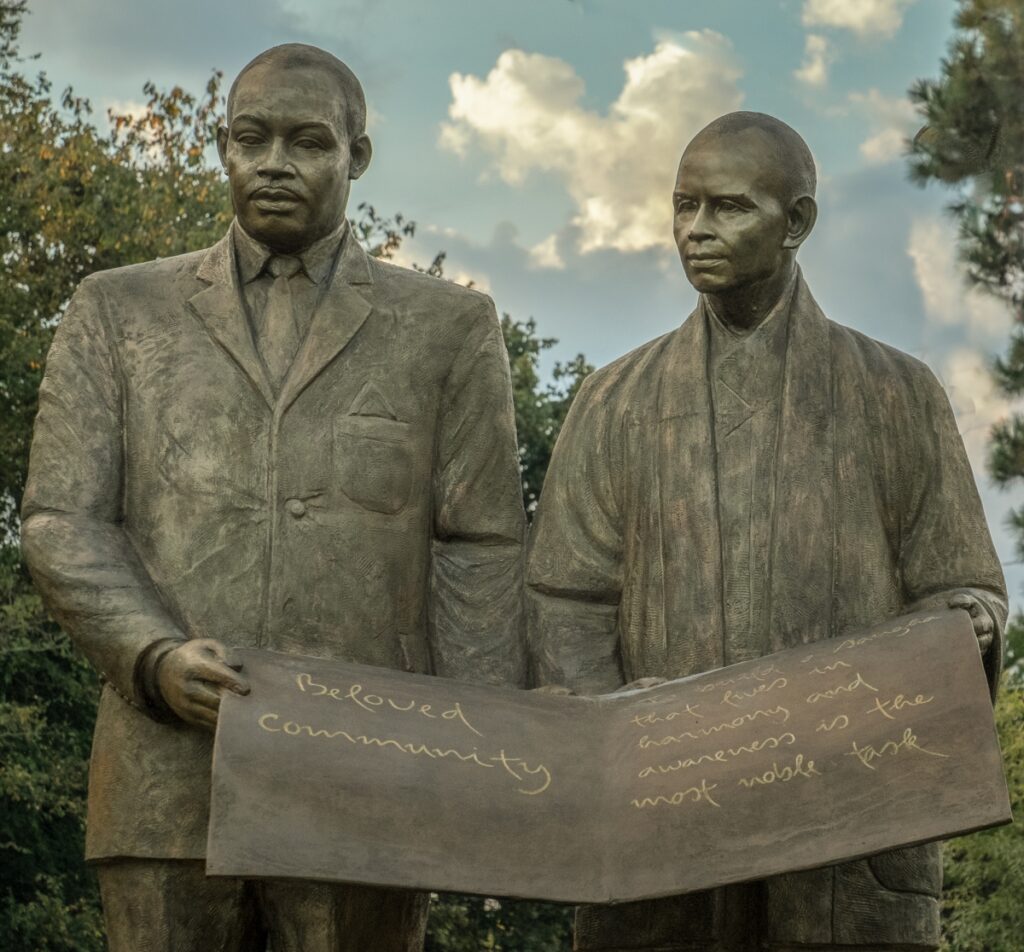
Image result for mlk weekend 2020 We were honoring, celebrating Dr. King and Thich Nhat Hanh's energy of love through justice in a public talk, did that come into play? maybe. 

Image result for mlk and thich nhat hanh

The theme of the talk, "America's Racial Karma." Did that come into play here? maybe, !%#* yes!


Someone once said, there are no coincidences, everything happens for a reason. 


Three people sharing lunch together at a deli in San Diego. One Black man, one Asian woman, one white man. As we finished our lunches, a man spoke up and hollered to us at an adjacent table without introduction, hello or warning and blurted out,  "Can I take a picture of you (all) and send it to the White House?" Our friend, who is Black and I, who am Asian sat silent even though we were seated physically closest to the man. For me, it's a way of preserving safety, not knowing where this stranger was coming from.

Why would he ask that?

He didn't ask it of any other tables in the restaurant. The white man at our table was my husband, he replied back "whose side are you on?" with ease and a soft smile. The white man at the table said something like, "once you go through Orange County it's like you're in the South." Perhaps meaning there's fewer BIPOC (Black Indigenous People of Color) here, more overt segregation here? Fewer people in delis who are a mix of races enjoying a bagel, dill pickles, pastrami on rye? This man who blurted out wanting to take a picture of us was obviously charged and activated and it was at our expense.

I think he was genuinely concerned about hatred, racism and separation in our country.  As the man walked out, he said he's really worried because he has grandkids. The two of us, BIPOC remained silent,  didn't engage or join in conversation. All the words were between two white men. In those seconds I realized oh, he wants to use us to make a point. Simultaneously in the same seconds it was about safety, keeping myself, my surroundings, my friend safe from misunderstanding or who knows what.

 Could I have afforded the risk to engage? To me, to my friend, my husband and those in the deli? Could I have afforded a confrontation? Did I want a confrontation?  I'm shaken and angry.

What gives you the right to interrupt us?

As we got into the car and home that day, we had a deeper conversation about the encounter. As the days progress, I'm reflecting more and deeper.  I pointed out to my husband that due to white privilege and power, he (my husband) responded to the man with humor, curiosity and ease, questioning him about whose side he was on, and could help to de-escalate the man's activation.  It's different for People of Color. It's about protection, safety, physical, emotional, and for me, deeply embodied. It's different for a woman of color. I've learned it's very different for a Black man.

If you don't know, please learn why it's different.

The legacy of white supremacy came up. Micro and macro aggression, check. white saviorism, check. white superiority, check. white exceptionalism, check. Racism, yup. Patriarchy, power and privilege, yup, yup, yup.

It's apparent to me that yes, we ended up at the deli on MLK weekend, while intentionally honoring MLK and shedding light on the kinship between two peacemakers, Dr. King and Thich Nhat Hanh, hearts of love and justice.

We were together for that reason, to invite over one hundred folks to look deeply into our racial karma, America's Racial Karma.
Image result for america's racial karma images

We are all wounded, activated, in this moment, with this administration, truth is unveiled. Some are seeing more clearly, some for the first time, and it's scaring them. I think this man's fear was seeping out in a weird place and time at our table, all over us, like mustard spilling out, he couldn't contain himself, he made a mess and walked away.

We  have much work to do, we have much healing to do. There are many brave hearts who are engaged in racial justice and antiracism work that we need to honor, amplify and protect. We need more brave hearts.

And I'm not going anywhere, gonna continue to show up, and make you uncomfortable, show up at the deli with my friends and family.  And next time I hope to be brave enough to say something although in that moment, I was angry and silent. Perhaps the best thing in that moment was to not say anything while angry. Perhaps that was my meditation practice showing up. Making a vow to not speak when anger arises. I'm going to keep showing up in better ways recognizing it's always there, this separation, this discomfort of race. It will keep seeping out, harming and hurting until we acknowledge our history.

 Don't turn away. Read, educate yourself, get involved in being anti-racist. It's dangerous to think, say, believe, "I'm not racist". We live with our racialized history, it resides in our bones. We need to educate ourselves to be antiracist and work to dismantle racism.  It's an inner strength, a muscle to rebuild. I know it's  there, we need to practice to engage it. I work it more and more everyday.

And no, you can't take a picture of us and send it to the White House. Image result for camera images
We are not on display for you.
We are not a prop for you.
We are not objects, a curiosity.
We are not here to make you feel better.

Do your work. Do the hard work.

And I will continue to do mine

Image result for me and white supremacy imagesImage result for how to be anti racist images
Suggestions for practice and action-if you want to "Combat Racism, Change the World and Become a Good Ancestor" read  "me and white supremacy" by Layla F. Saad and  "How to be an Antiracist" by Ibram X. Kendi.  Good places to begin and continue, one day at a time.


May we heal white supremacy. May we all be safe and free. May we all be loved. May we all know true justice.  For the benefit of all beings.


Friday, October 4, 2019

i n b e t w e e n s p a c e a n d t i m e


The lotus pond in my hometown, Sacramento is becoming one thing and another, in transition. It is both thriving and letting go. The lotus seeds have dropped and are now in the dark, fertile mud along with many living micro-beings while the upright green leaves are still full of chlorophyll-generating oxygen and energy, reaching toward the autumn sun to nourish themselves, feed their roots for the coming winter and next year's bloom. They never give up. They continue. What a meaningful lesson. And one lotus bud amidst the field of empty pods was still waiting for its moment to blossom to their full potential. 


In visiting my mother, who recently turned 95, I notice in some ways she is both thriving and letting go. Our conversation, in some ways, relies less on words and in other ways, on the fullness of rests and pauses allowing for immeasurable lessons of presence and true love. 
thelma and louise, cultivating joy and goodness

A recent teaching by friend and mentor, Larry Ward (https://www.thelotusinstitute.org/blog) inspired me to continue to reflect on dismantling and re-mantling. How, like lotuses, we can thrive and let go. As we say good bye in gratitude, we can also say hello, welcome. 

We have the capacity to hold both. 

Later that morning, I came upon a tree with three trunks and noticed how near the base a perfect resting place formed a seat. When we come together, we can form a resting place, a place to pause, that offers a refuge. Intending to seek out more spaces to pause and to nurture spaces like this for those in need of a resting place, a refuge. 

And when I looked up, I found three jewels. 

Looking up this morning, three jewels. 


Wednesday, January 23, 2019

Hard For Me to Say

I love you mom and dad. Why were those words so difficult to say when growing up?  A recent op-ed piece by Viet Thanh Nguyen in The New York Times on Sunday, January 12, 2019 illuminated some of the reasons why.

 "Is it true Asian-Americans cannot say I love you?" Nguyen asks.  That it is an effort, for me too, born of "self-consciousness" and I would add, the complexity of internalized oppression, racism and our country's inability to look deeply at our racialized history.

When I watched Sandra Oh thank her parents in Korean and English at the Golden Globes, I was proud of my Asian-American heritage and I cried. Tears of joy and recognition. As a Japanese-American,  I have felt like I've lost a part of my heritage, my language, having never learned Japanese as a child, yet remembering  vividly, that I understood it when spoken to by my parents, aunts and uncles. My parents didn't force my siblings to learn Japanese because they wanted us to assimilate. Sandra Oh used her voice in her ancestral language to say I love you and it shook my heart.

I felt a mental block when I took a college level Japanese language class unable to adequately memorize vocabulary, learn kanji and dialogue. I didn't belong with either the Japanese-American students whose parents were from Japan or the mixed students interested in learning the language of my ancestors. I recognize how and why the block feels like a wall,  tall and wide. It's like a barrier related to cultural erasure, some call cultural genocide, what I name as inter-generational trauma as a descendant of incarcerated family.
 My grandparents and parents are first and second generation immigrants from Japan who emigrated in the early 1900s. They were amongst the 110,000+ incarcerated during WWII for looking like the enemy of the time. So when Viet Thanh Nguyen wrote of the "silent sacrifice of their parents and how difficult it is to show gratitude as children" "revolving around garbled expressions of love," I understood.  That's why it's hard for me, too. My grandparents and parents sacrificed so much that it is almost "beyond imagination". Conveying gratitude of their sacrifices is beyond words.

So many of their dreams and aspirations were not realized, they lived with unspoken regret of not having their dreams transpire. I heard phrases growing up like shikata ganai-it can't be helped and gaman, to practice patience, endurance, perseverance of their experience during the war in American concentration camps. Internally it infuriated me.

Like Mr. Nguyen, as a kid, I needed more stories, writers, musicians, artists who looked like me in the media, more people like me telling their stories. Instead, Asian-Americans were typecast as the enemy, the servant, the other, voiceless in the background. He goes on to say the distortions in the media made us ashamed of ourselves, our parents. Wow, that's a ton to unpack! And true.

Today, I'm looking at the privileges I now benefit from and haven't always had. I'm looking at ways to use them and other resources I have and be on the lookout to help and speak up when I witness racist comments about refugees and immigrants and inform from the source of love, empathy, and understanding. Perhaps, my expression of love is communicated in action. I'm speaking up more. Is that how a Sansei (third generation) shows their love? To be one who advocates in a way that would have been so helpful to my ancestors . If more citizens stepped up, spoke up before our government rounded up 110,000+ innocent people, stripped them of their constitutional rights and locked them up for years.  It is not easy and sometimes it's downright overwhelming to be a voice. My antidote to heart pounding fear of stepping up is hope. I go to the well of love from family, friends, teachers and beloved community. A friend shared a phrase of optimism and hope with me recently, "be on the lookout for love." With a clear commitment (and deep breath), grounded in hope, I'm able to show up and speak up with more freedom, honesty, and fullness.

Gratitude to Viet Thanh Nguyen for writing with honesty and lighting a spark. A deep bow to Sandra Oh, a sister to many. I see you, I've been waiting for you.

 I love you beyond words mom and dad.

We are all welcome. All identities belong here.


Tuesday, October 9, 2018

Going Nowhere


Guess what? My heart aches from the past weeks of confirmation hearings but I am not broken. I am not defined by this moment in history. Angry words fueled by fear will not anger me. Spin and coded language can't derail who I am. In this moment, I call for more imagination, empathy and compassion than our leaders can seem to muster.

  We are the ones we have been waiting for rings true in this moment. We are the ones with the vision of possibility, curiosity, imagination.

 This moment calls forth an unbreakable, indestructible circle of support, love, and remembering who we are. That's the direction I'm traveling and I have confidence. We are much more than our circumstances, our suffering, a vote or lifetime appointment. We are not defined by the narrowness or confined by sticky tendrils of anger, agenda or division.

In going nowhere, I will continue to be grounded and rooted. As a woman, I am a life giver. As as a woman, I am a nurturer. As a woman, I am a warrior. We, as women are warriors, as mothers, as caregivers, life givers we know when we need to be fierce and when we need  to be tender. We know what it takes to survive for future generations. Words and narrow actions cannot destroy me because I am rooted in love and grounded in peace. I rise from my peaceful beloved community, you know who you are, from ancestors and teachers who have survived and thrived. This moment can't limit or reduce me. This moment is an elixir that has awakened the true spirit of engagement, of expansiveness, and openness.

A Magnolia from a morning walk. They symbolize perseverance, love and feminine energy in China and Japan


Let's be here for each other in this moment. Let's remember we are so much more than this moment.

I am here. Going nowhere.


If you need some inspiration:
Layli Long Soldier,  Lakota poet is a young, creative force, read her book, Whereas or listen to On Being podcast https://onbeing.org/programs/layli-long-soldier-the-freedom-of-real-apologies-mar2017/.
Valarie Kaur (thank you, Antoinette) a Sikh American activist and lawyer is another courageous and tender voice, see her TEDTalk, http://valariekaur.com/.


Tuesday, July 17, 2018

A Heart Like Vincent

I want to touch people with my art. I want them to say,  he feels deeply, he feels tenderly.
                                                                -vincent van gogh


Van Gogh's prose touched me near the end of the film, "Loving Vincent".  The film is a visual journey through his creative heart. Over one hundred artists worked to depict a story of Van Gogh's artistry, vision, struggles on film. What touched my heart were the feelings on his heart that were expressed in his paintings and letters that gave me insight into how he realized truth that the world wasn't ready to see and hear.


I think our hearts continue to be broken and we fall in love in countless and unimaginable ways. To be fully engaged is a path of falling in love with the world while feeling brokenhearted from the sadness, struggles in ourselves and in other beings-From a friend dealing with the end of a marriage to very young immigrant children being separated from their parents, incarcerated. From neighbors grieving the sudden death of their son to personally working to heal the scars of overt and internalized racism.


I am prepared to have my heart broken because it lets me know I'm alive, fully engaged in the world and willing to take action.  To live with an awakened heart it needs to be open, full, clear and strong.  My heart needs to be vulnerable in order to be fearless.

Van Gogh's artistry expresses an independent nature, one could call it fearlessness through his bold use of  color,  both rough and graceful movement of his pen or brush. Sunlight illuminates the sky, brightness seeps through windows. Sensitivity and vulnerability to his surroundings imbue his prose too.  He saw things differently. Did he feel things differently, too?

Am I reaching for the stars to feel his heart was bold and vulnerable, fearless and open?


Waking up-

"Would it bother you if I smoke?"  I said no. I didn't want him to hide. I've witnessed many who look like they need to hide-often alone outside when it's cold and wet or hot and arid-it looks isolating and lonely.  So I said no, it wouldn't bother me.  But my heart was heavy.

 My breath is your breath.

My heart sunk a little when I found out that my adult son smokes.

A few weeks later, I started a letter to try to say with kindness, tobacco companies are profiting from addicting you to nicotine. Before I completed the letter I listened to a wise teacher and poet confess to our class, "I finally realized why I smoke!" They went on to say,  I've been crying while preparing lectures and sometimes during teaching sessions.  Adding, "You don't know how many of my poems begin with, my heart is breaking."  Smoking allows this teacher to pause emotionally, to push aside emotions that are too strong in the moment. I recognized that sometimes our thoughts and emotions feel so strong and we don't know what to do. When this poet reads their poetry and cries, I become a witness. I come along on their journey of sorrow, of heartbreaking struggles and how they bear witness to global tragedies, felt to the core. Those of us in the class that day were lucky. We benefited from the vulnerable and empathic heart of our teacher and poet and our hearts opened.


Lower Hamlet rose garden, Plum Village, France-present moment, wonderful moment.
I pushed myself to look deeper.
I imagined my son and loved ones in my life who smoke. Can they shut down painful emotions and feelings by smoking? And yes, sometimes it looks like they are receiving a kind of temporary relief.

A sudden wave of understanding arose, not fear.  Love surfaced, not judgement. A wide open wish,  a wish for everyone to struggle less, find a way, someday, to be with difficult emotions.


The letter I wrote was different. I began again.  A love letter.

 I breathed for you for nine months.

A montage of Vincent Van Gogh's letters


I felt the pull and remembrance that we were once physically connected, his life dependent upon mine and that's where the tug at my heart originated. Yet, in that moment, all I felt the need to do was to bow, to acknowledge something different was hitting my core. What I needed to say in my love letter was: Dear Son, May you find peace, solidity, calm and ease in your body and mind, someday.

My heart broke open a little that day because I let myself fall deeper in love with my son as I awakened to how we sentient beings cope with our suffering, our strong emotions, thoughts, and perceptions.

 I think I see with different eyes; the eyes of understanding and the eyes of love. I will do my best to support and love my son because I once breathed for the two of us.  I am taking care of my feelings with compassion for our future descendants. I am laying a path of healing for all who come next. When I look with the eyes of love, impermanence, and compassion, I know we can nourish and help each other.


 I want to continue to fall in love, to feel more connected to life, not less.


Chogyam Trungpa Rinpoche a Tibetan Buddhist teacher once said,

"If you search for an awakened heart...you find tenderness, you feel sore and soft and if you open your eyes to the the rest of the world, you feel tremendous sadness, not from being mistreated, this sadness is unconditioned, your heart is completely exposed. No skin or tissue is covering it. Your experience is raw and tender and personal. For the warrior, this experience of a sad and tender heart is what gives birth to fearlessness.  Real fearlessness is the product of tenderness. You are willing to open up without resistance or shyness and face the world. It is this tender heart of a warrior that has the power to heal the world." -from The Sacred Path of the Warrior


 One of Vincent Van Gogh's most precious gifts was his wide, open and vulnerable heart; one that I believe was broken over and over again. He may not have had much "skin or tissue covering it." I am a recipient of his tender heart. I benefit from his expression in his paintings and sketches beyond language that lives on. He felt the world that way. Vincent fell in love over and over again.


I aspire to touch people so they can feel kindness and tenderness, love and understanding inside and all around them. 

May a heart like Vincent's benefit all beings.


View from the train to Sainte-Foy la-Grande en route to Plum Village


Monday, December 18, 2017

An American Buddhist in Tibet


 How will I honor the Tibetans and their practice? What can I do? 
I’m just one person. 

Ichi-go, ichi-e is a Japanese saying that translates to one chance in a lifetime or one encounter in time, not to be replicated.  I try to remember how precious, unique and sacred one encounter can be. This phrase carries meaning as I reflect upon my glimpse into Tibetan culture, history and people I've  respected from afar for decades and who occupy a significant place in my heart. I realized soon after arriving in Lhasa, Tibet that it would be impossible not to look and see the occupation, oppression, domination of the Tibetan people by the Chinese government. What was I going to do with the conditions, privilege that brought me here?  How was I being complicit by taking non-action? Bearing witness and telling what I saw to whomever will listen is my first responsibility.


Sweet smoky cypress imbued the air igniting my senses. 


Standing amidst thousands of Tibetan prayer flags near a 17,000 foot summit, I felt the power of wind flow through me. Prayer flags adorn the landscape and carry sutras, Buddhsit scriptures on the wind in the ten directions. Each flag represents an element of nature red-fire,white-air/wind, blue-sky, yellow-earth, green-water.
 Sheer determination in the steps and prostrations of devoted pilgrims impels me to speak up.


Have you ever witnessed an injustice by a group who uses power, intimidation, imprisonment over another?  Have you ever felt paralyzed from your natural desire to stand up to injustice because the heat of fear rose up in your body? I witnessed a people disrespected and intimidated by a powerful force. This is a personal account of facing fear for my safety while standing up for the Tibetan people-people I've not often seen in major media. As an American, I am most familiar with exiled Tibetans forced to leave their country for India, Nepal, U.S. and Europe. Rarely have I had the chance to know what Tibet is like for Tibetans. 


I’m compelled to tell what I saw because I made a promise, a vow to myself not to forget the devotional people of Tibet I met. I witnessed a practice of Buddhism steeped in ritual and devotion of over 1000 years that deserves to be told. I hope to convey an account of how I was inspired and why it left an indelible mark on my heart. I need to tell what I saw to honor the Tibetan people residing in Tibet. Standing up amidst fear for my safety and for that of my traveling companions. 

Central to the Dharma, Buddhist teachings, is the 8 Fold Noble path, often the entry point is skillful or wise understanding. Near to my heart was the Bodhisattva Vow to end the suffering of all beings.

 I consider Tibetan Buddhists my siblings on a path.  We are interconnected. I felt a deep kinship toward family members wanting to fully practice the traditions that have been a part of their daily lives for over a millenia.  Growing questions and uneasiness arose each day toward the Chinese government that occupies Tibet. The historic places we were fortunate to see felt like a police-state surrounded by breathtaking landscape, amidst modern hotels and comfortable amenities and I was perpetually on alert.  

Will I be awake or asleep to the injustice, oppression and discrimination? 

It became clear that I was bearing witness in real-time to injustice, oppression and surveillance not experienced by many Americans. It became clear,  as I gave up my passport daily,  in the unspoken uneasiness of my companions and at police checkpoints, that surveillance was a way of life here.  As a seasoned traveler,  I keep my passport with me. I was aware of my discomfort several times a day when it was surrendered. 

We bear witness to special occasions, celebrations and sometimes accidents and crimes. We bear witness to remember the truth. This is my testimony of what I witnessed.  It would have been easy to be mesmerized by the dream-like landscape of Tibet but it would be unconscionable to be unconscious to the vast injustice witnessed in this occupied country. 

I will never forget you.


 A daily invitation of color and light.
Yongbulakang Palace, the oldest palace in Tibet.

   There are restrictions to the auspicious spirtitual sites where Tibetans can pray, there is intimidation in the overwhelming police presence, seen and unseen. There is an oppressive nature in the lack of Tibetan language I witnessed in local shops, hotels and cafes. The language I noticed was Mandarin. It seemed like the Tibetan language and culture was endangered.  Empathy, compassion and a sense of needing to speak up awakened in me. 

When I think of the term compassion,  His Holiness Dalai Lama is who I envision. He is the spiritual leader of one of four major branches of Tibetan Buddhism, called Gelug or Geluk. He is revered by the Tibetan people. 

 It’s illegal to have a photo of the Dalai Lama in your car, in one's home, in one's wallet. Citizens and tourists can be intimidated, beaten, or jailed by local authorities for possessing his photograph. 

A few times I attempted to explain that there are Tibetan Buddhists practicing in the U.S.  It was difficult to convey the thousands of Tibetan Buddhists in the west. Censorship blocks social media so there were no easy ways to share the many scholars, monasteries, monastics, temples, that have been cultivating for decades outside of Tibet.  Shop owners in small towns thought it funny to see westerners wanting to purchase prayer flags in monastery stores. Propaganda is so strong that the Chinese invasion of Tibet during the cultural revolution is taught as “liberation”.  Some believe China freed the Tibetan people from slavery under the Dalai Lama. Hundreds of monasteries were desecrated and destoryed during the cultural revolution.  Potala Palace, the winter palace of the Dalai Lama is a magnificent testament to the significance of the Dalai Lama lineage. It's iconic architecture, 1000 rooms of art, thankgas, sculpture and chapels exudes an emptiness, not expressing its full potential to serve a nation of devotional Buddhists. Today,  thousands of tourists visit each day. The weight of heavy security, seen and unseen, is felt all over.  


Potala Palace, winter residence of His Holiness Dalai Lama prior to exile.

A celebration we stumbled upon Samye Monastery, uniformed police always present, top left.
Lamas, Tibetan leaders at Samye founded around 795 C.E.


View from Yongbulakang Palace
From the first day we entered ancient Barkhor Square in Lhasa, we were ushered through metal detectors, struck by the degree of police presence and  weapons on rooftops. In our country we call them snipers.  A long black bus with bars on the windows was parked near the entrance of Jokhang Temple.  Video cameras mounted inside our van were trained on us. Hand held fire extinguishers of various sizes were grouped together on some of the busier streets and squares. Investigating, questioning, and curious but there was no one to ask without feeling like I was compromising their safety, our safety. Why so many checkpoints daily? Why do we need to release our passports, visas and permits several times a day?  I learned the fire extinguishers were to immediately quell self-immolation of monks and nuns. Since 2009, there have been over 145 self-immolations of nuns and monks in Tibet in protest of the conditions under occupation.  I’m shocked and don’t want fear to override the truth of what was being revealed. 
Tashi Lhunpo Monastery, founded by the 1st Dalai Lama in 1447


Nomadic camp.

I will never forget you.


Dear Sisters and Brothers in Tibet,  

Please know that your ways of practice have been carried over the Himalayas.  For many decades, we have cared deeply and study your traditions with deep reverence.  Powerful winds continue to carry the sutras across nations and oceans. 


Your spirit can't be suppressed. Your long tradition of Buddhism is too enduring and buoyant to be captured, possessed, or erased. Like clouds shape shifting across the expansive Tibetan sky, your customs are swept across the globe to inform and inspire living beings in countless nations. 


No one government, no arsenal of weapons or cruelty can eliminate your devotion and practices. We are watching, we are bowing in reverence to you. Your steps, prayers and devotion are our steps, prayers and devotion.  

Please do not be dispirited. Please do not lose hope. There are thousands of earnest practicioners who respect your traditons.  Many beings benefit from your practice. You have touched numberless hearts.


I will continue to tell the story of what I witnessed.


No one can stop the wind. 


With love and deep compassion,


Your sister


Jokhang Temple in Barkhor Square. Police on rooftops, rappelling down the buidling at the top first and fourth windows.


The next time you see Tibetan prayer flags, please remember the Tibetans living in Tibet.  Remember their determination and devotion under some of the harshest conditions. Many are still imprisoned and tortured. Prayer flags are a part of our culture now, in part because of the Tibetans both inside and outside of Tibet. Sutras are not the only messages on the flags as they flow in the wind. So too, does the essence of a people.

Bodhisattva Vow

May I be a protector to those without protection,

A leader for those who journey
And a boat, a bridge, a passage
For those desiring a further shore.

May the pain of every living creature
Be completely cleared away.
May I be the doctor and the medicine
And may I be the nurse
For all sick beings in the world

Until everyone is healed.      -Shantideva

To learn more:

http://www.nytimes.com/2012/12/13/opinion/tibet-is-burning.html
https://freetibet.org/about/travel-guide
https://www.dalailama.com/
(https://tricycle.org/magazine/noble-eightfold-path/)